
Stop Sleeping in Your Medicube PDRN Mask (Side Sleepers Are Doing It Wrong)
If you’re wondering how to sleep in medicube pdrn mask side sleeper, the answer is simple: you shouldn’t.
Side sleeping causes mask slipping, uneven absorption, and increased dryness—making overnight use ineffective.
How to sleep in medicube pdrn mask side sleeper (the correct way)
You shouldn’t sleep in a Medicube PDRN mask overnight—especially if you’re a side sleeper.
Instead, use the mask for 30 to 45 minutes and remove it before it fully dries to prevent moisture loss and skin irritation.
Get One Thing Straight: TikTok Is Not a Skincare Clinic
I’ve spent over a decade in K-Beauty marketing. I’ve written the briefs. I’ve briefed the influencers. I know exactly what talking points get handed to creators before they film that flawless “overnight mask transformation” video.
So here it is, straight:
Sleeping in a Medicube PDRN jelly mask as a side sleeper doesn’t just underperform — it actively works against your skin.
That viral content you’ve been watching — the person lying perfectly flat, staring at the ceiling, waiting for the mask to go transparent? That’s a controlled shoot. Softbox lighting, a camera crew, and zero actual sleeping involved. It is not your Tuesday night.
Here’s what actually happens when side sleepers wear this mask to bed.
Many users searching how to sleep in medicube pdrn mask side sleeper run into the same issue—mask slipping and dryness overnight.
Three Things That Go Wrong — Every Single Time
1. The Mask Moves. Your Absorption Doesn’t.
Hydrogel masks have one non-negotiable requirement: continuous, uninterrupted skin contact. The second your face hits a pillow, that contact breaks. What follows:
- Uneven ingredient delivery across the face
- Air pockets forming between mask and skin
- Compromised occlusion — which directly tanks hydration efficiency
If you’ve ever woken up with the mask half-stuck to your pillowcase, you already know this.
2. Folding Creates Pressure Lines That Linger Longer Than You’d Like
When a hydrogel mask creases under sleep pressure, it leaves marks. Usually temporary. But repeat this nightly and you’re looking at:
- Exaggerated dehydration lines in thinner skin areas
- Visible imprints around the under-eye and nasolabial zones — the exact places you’re trying to improve
The irony writes itself.
3. Extended Wear Dries You Out. The Mask Is Doing the Opposite of What You Paid For.
Here’s the part brands will never put in their marketing copy: transforming masks are engineered to lose moisture gradually. That’s the mechanism. That’s the whole point of the “jelly-to-film” effect.
Leave it on past 2–3 hours and the physics flip on you:
- The drying gel starts drawing moisture out of your skin
- Tightness builds around the mouth and eye area
- Barrier function takes a temporary hit
Overnight wear is not a bonus feature. It’s a misuse of the product.
The Ingredient Reality Check (No Fluff, Just Facts)
What PDRN Actually Does — and Doesn’t Do
PDRN (Polydeoxyribonucleotide) is derived from salmon DNA fragments. In clinical settings — specifically injectables — it activates adenosine A2A receptors and delivers measurable regenerative results. The research on that is legitimate.
Topical application is a different story entirely:
- Molecular penetration through intact skin is limited
- Results are surface-level: mild anti-inflammatory signaling, temporary hydration boost, barrier support
- The “skin regeneration” framing in marketing copy is borrowing credibility from injection studies and applying it to a gel mask. That’s not science. That’s copywriting.
What you’re actually getting from a PDRN mask, used correctly: a real but modest improvement in skin texture, tone, and immediate hydration. That’s still worth something. Just not what the packaging implies.
Why the Mask Turns Transparent — and Why That Doesn’t Mean What You Think
The “transparency = absorbed” claim is one of the most persistently misleading things in the hydrogel mask category.
Transparency is a physical state change in the polymer network. Water evaporates. The gel structure tightens and clears. That’s it. It is not a signal that actives have penetrated your dermis. At the point of full transparency, the mask has largely finished its job — and is beginning to start on yours, pulling moisture back out.
Remove it before that happens. I’ll explain exactly when below.
The Only Three Masks Worth Your Money Right Now
I’m going to be direct about something: most sheet masks and hydrogel masks on the market right now are trading on either PDRN hype or “glass skin” aesthetics, with formulations that don’t hold up to scrutiny. These three do.
1. Medicube PDRN Pink Collagen Jelly Mask — The Benchmark


Best for: Compromised barrier, dull skin, post-procedure recovery
Yes, it’s the product in question. And it earns its place on this list — when used correctly.
The formulation combines PDRN with niacinamide and collagen in a way that actually makes sense together: repair signaling, brightening, and surface-level plumping working in parallel. The short-term visible result — that immediate bounce and luminosity — is real, not a filter trick.
The non-negotiable usage rule: 30–45 minutes maximum. Remove it before it reaches full transparency. This is called the pre-dry removal method and it’s the difference between this mask working and this mask robbing your moisture barrier.
Honest limitations: The collagen is doing surface work only — it isn’t penetrating. And if your skin runs sensitive, check for fragrance tolerance before committing to regular use.
This is the product to start with if you’re new to the category. Nothing else in this price range hits the same formulation balance.
👉 Check current pricing and availability
2. Biodance Bio-Collagen Real Deep Mask — The Smarter Daily Driver

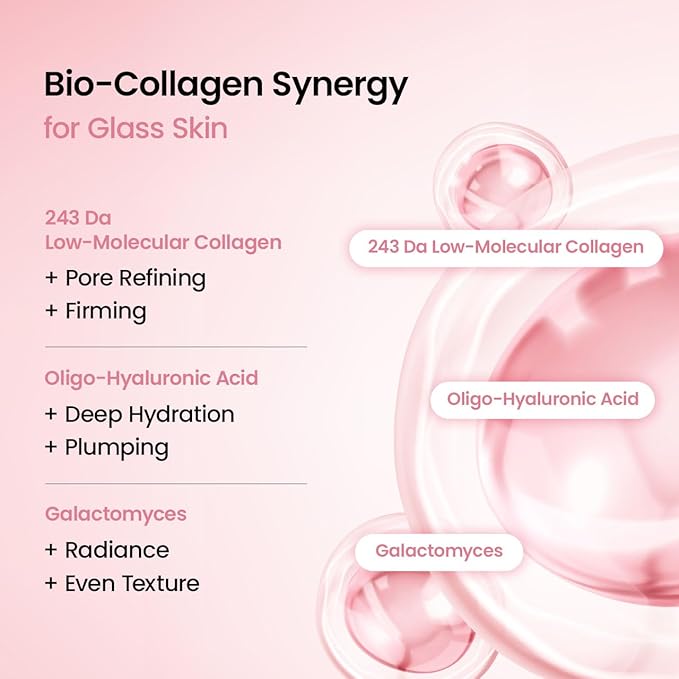
Best for: Dehydrated skin, oily-combination types, visible pore concerns
Biodance built this mask around a humectant-forward system — glycerin and hyaluronic acid doing the heavy lifting — rather than leaning on PDRN as a marketing anchor. That’s a formulation philosophy I respect.
The result is superior hydration retention compared to most hydrogel competitors. Your skin holds onto what it gets. That’s the metric that matters for daily use, not the dramatic visual payoff during wear.
Where it differs from Medicube: this isn’t about regeneration signaling. It’s about water balance and elasticity maintenance. A fundamentally different goal, and the right tool if your primary concern is sustained hydration rather than post-treatment recovery.
Honest limitations: Less targeted for serious barrier repair. The “transforming” visual effect is minimal — which some consumers mistake for underperformance. It isn’t.
If you’re using a mask more than twice a week, this is the one that belongs in your routine.
👉 Check current pricing and availability
3. VT Cosmetics PDRN Daily Sheet Mask — The Unglamorous Smart Buy


Best for: Building a consistent routine on a budget
Sheet format. Bulk packaging. Lower cost per use. None of that sounds exciting, and that’s exactly why the beauty industry doesn’t talk about it enough.
Here’s what matters: routine compliance is the single biggest driver of skincare results. A $40 mask used twice a month will always underperform a $10 mask used twice a week. The VT sheet format also eliminates the over-drying risk almost entirely — the occlusion dynamics of a sheet mask are simply less aggressive than hydrogel.
The PDRN + soothing agents combination is effective at the maintenance level. Not transformative. But maintenance is what most people actually need.
Honest limitations: The glass skin payoff is lower. If you need the immediate visual result for an event or photo, this is not your pick. For everything else, it’s the rational choice.
👉 Check current pricing and availability
FAQ
Can you actually sleep in a Medicube PDRN mask as a side sleeper?
No. Mask displacement from pillow contact, uneven absorption, and moisture reversal from extended wear make overnight side-sleeping use counterproductive. Thirty to forty-five minutes upright or on your back. That’s the window.
Why does skin feel dry after a PDRN jelly mask?
Because the hydrogel drying mechanism doesn’t stop at the mask surface. Once the gel is depleted of its own water, it will draw from your skin. Extended wear past the optimal window guarantees this outcome.
What’s the correct way to use a transforming mask?
Apply for 30–45 minutes. Remove before the mask reaches full transparency. Follow immediately with a moisturizer or barrier cream to lock in what the mask delivered. Do not sleep in it.
If you’re still wondering how to sleep in medicube pdrn mask side sleeper, the safest approach is to avoid overnight use completely.
The Bottom Line
Brands aren’t going to tell you to use their mask for 45 minutes and take it off. That doesn’t make for good content. But it makes for good skin.
Your sleeping position matters. Your wear time matters. The product you choose matters. Stop letting an algorithm make those decisions for you.
The three products above are the ones I’d recommend to someone who actually asked me — off the record, no commission involved — what to buy. The affiliate links exist because that’s how independent publishing works. The recommendations don’t change because of them.
👉 Compare current pricing and availability: